We accept:


© Lingua Learn Cambodia. All Rights Reserved 1st January 2026

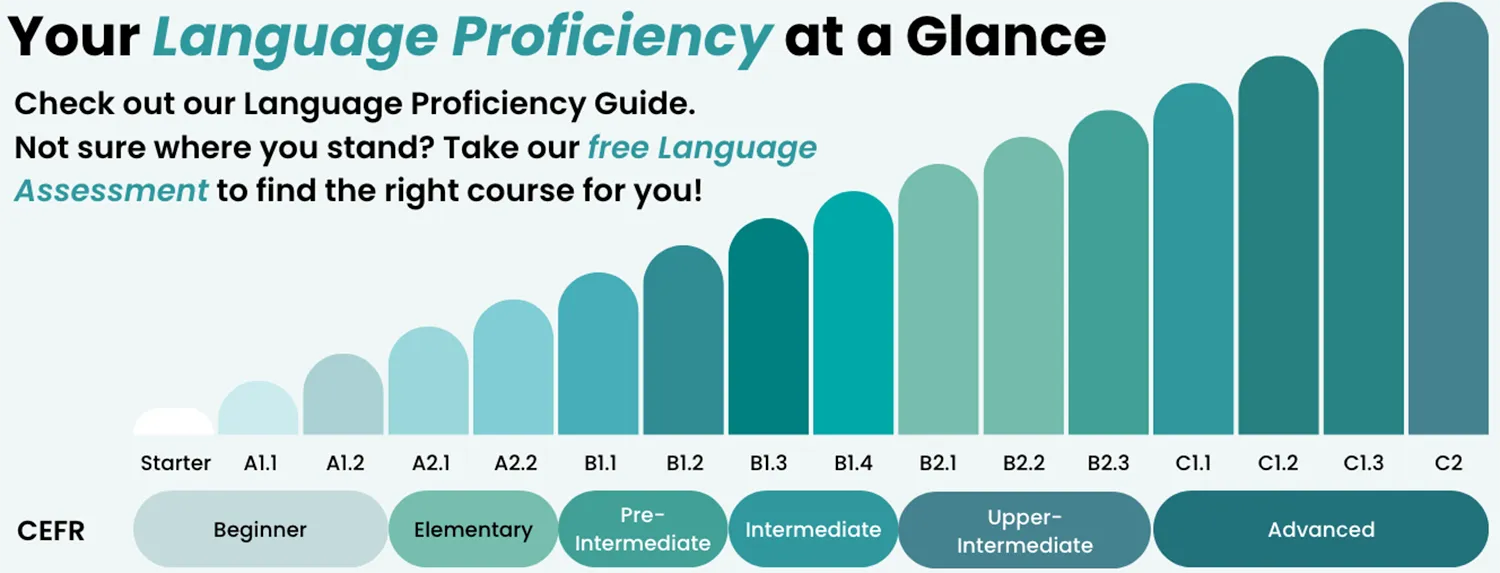
If you’ve ever looked for a language course, you’ve probably seen levels like A1, B2, or C1. But what do they actually mean—and how do you know which level is right for you?
In this guide, we break down the CEFR language levels, how they work, and how to confidently choose your level before starting a course.
Need help choosing the right language course?
👉 Book a free online consultation
The Common European Framework of Reference for Languages (CEFR) is an international standard used to measure language ability.
It was created to make language levels:
Today, CEFR is used worldwide by:
CEFR divides learners into six levels, grouped into three categories:
A1 – Beginner
A2 – Elementary
👉 At this stage, communication is still limited, but improving quickly.
B1 – Intermediate
B2 – Upper Intermediate
👉 This is often the minimum level for working or studying in a foreign language.
C1 – Advanced
C2 – Proficient
👉 At C2, the language feels almost like your own.
Understanding your level helps you:
✔ Choose the right course
✔ Avoid frustration (too easy or too hard)
✔ Track your progress clearly
✔ Set realistic learning goals
Starting at the wrong level is one of the biggest reasons students quit.
Here’s a simple way to find your level:
Don’t choose based on what you studied before—focus on what you can actually do now.
Ask:
While self-assessment helps, it’s often inaccurate.
At Lingua Learn Cambodia, we offer a structured CEFR level assessment for $15, designed to:
👉 This small investment can save you weeks of frustration and wasted course time.
Let’s be honest—guessing your level often leads to:
❌ Classes that are too easy → boredom
❌ Classes that are too difficult → stress
❌ Slower progress → wasted money
For just $15, you get:
✔ Expert evaluation
✔ Correct placement
✔ Faster learning results
👉 It’s a small investment that protects your entire course experience.
Think of it as starting your language journey the right way.
Whether you are learning for:
Our CEFR assessment helps you start at the right level from the beginning.
We work with students across Cambodia, including:
👉 Clear level. Clear progress. Better results.
👉 Serious about learning a language?
Start with a professional level assessment for just $15 and make sure every lesson counts.
© Lingua Learn Cambodia. All Rights Reserved 1st January 2026

 Online Language Learning in Cambodia: Apps vs Live Classes – What’s Best...






Leave a Reply
Want to join the discussion?Feel free to contribute!